
GHK-Cu
THE RESTORER
Copper Tripeptide; Glycyl-L-Histidyl-L-Lysine-Copper; Kollaren; GHK Copper
GHK-Cu is a small copper-carrying peptide that tells your cells to rebuild collagen, reduce inflammation, and protect against oxidative damage. It's especially useful for skin rejuvenation and wound healing.
GHK-Cu Evidence Snapshot
How these guides are reviewedNot FDA approved · research use only
Reviewed by our clinical team
4 research sources
Aug 28, 2026
Dose and schedule recommendations shown below come from The Peptide App Clinical Team. Research links are provided so readers can inspect the supporting evidence directly. Review the sources.
Studied Effects & Mechanisms
Collagen Production
Stimulates fibroblasts to produce collagen and elastin
GHK-Cu is a copper-binding tripeptide, and one of its most-studied effects is signaling skin fibroblasts to ramp up production of structural proteins like collagen and elastin, along with the glycosaminoglycans that hold the matrix together. By supporting this rebuild of the dermal scaffold, it is thought to improve firmness and elasticity as that scaffold naturally thins with age. Most of this evidence comes from cell-culture and animal work plus small cosmetic studies, so treat it as promising early-stage rather than settled.
Wound Healing
Promotes angiogenesis and tissue regeneration
In wound repair, GHK-Cu appears to help on two fronts: it promotes angiogenesis, the growth of new blood vessels that feed healing tissue with oxygen and nutrients, and it supports the remodeling of the extracellular matrix so new tissue can form in an organized way. Better blood supply plus a healthier matrix is the plausible reason it is associated with faster, cleaner closure. This is a long-standing area of GHK-Cu research, but much of it is animal and laboratory work, so read it as well-explored preclinically rather than proven in large human trials.
Antioxidant
Protects cells from oxidative damage
GHK-Cu is reported to help buffer cells against oxidative stress, the background damage from reactive molecules that accumulates over time and degrades skin and other tissue. By tempering that oxidative load, it may protect the same cells and matrix it helps rebuild, which is one reason antioxidant and repair effects tend to be discussed together. The evidence here is mostly laboratory-based, so consider it an early mechanistic finding rather than an established outcome.
Gene Reset
Resets thousands of genes to a more youthful pattern
Gene-expression analyses have found that GHK-Cu can shift the activity of a large number of genes at once, nudging the overall pattern back toward one seen in younger, healthier tissue rather than switching any single gene on or off. The idea is that it acts less like a targeted drug and more like a broad reset signal for how cells behave. This work is genuinely striking but comes from cell and tissue studies, so what it means for real-world aging in people is still an open, early-stage question.
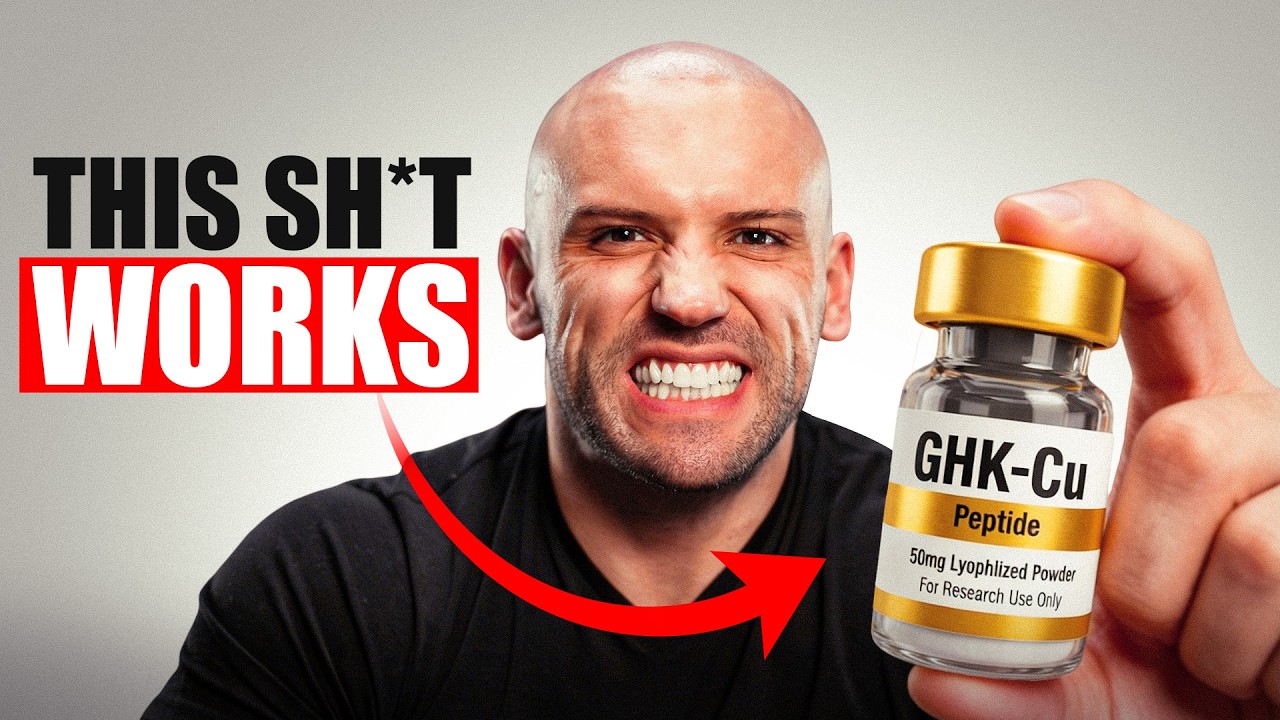
GHK-Cu is a naturally occurring tripeptide, three amino acids (glycine, histidine, and lysine) bound to a copper ion. Your body makes it on its own, and it circulates in the blood. It was discovered by the American researcher Dr. Loren Pickart in the mid-1970s, who found it in collagen tissue and proposed that it helps control both the building and the breakdown of collagen. Much of the foundational research traces back to his lab, a common theme with peptides. GHK levels are high in youth and fall sharply with age, dropping from roughly 200 units in young people to around 60 by age 65, which is one reason it is associated with the look of younger skin.
GHK-Cu is best known as a skin and aesthetic peptide. People read about it for firmer, plumper-looking skin, softened fine lines, and general skin rejuvenation, and it is often compared with ingredients like retinol and vitamin C. It has also been studied for wound healing: one study using a topical GHK-Cu gel on diabetic foot ulcers reported closure improving from about 60 percent to 98 percent. Interest in hair is more modest, and it is usually framed as a possible add-on rather than a replacement for established options. It is also the peptide people add to a BPC-157 and TB-500 pairing to make what the community nicknamed the glow stack. Some newer research is looking at connective-tissue repair beyond the skin.
GHK is actually a breakdown fragment of type 1 collagen, the most abundant collagen in the body. When tissue is damaged and collagen is being remodeled, GHK is released into the bloodstream, where it seeks out copper with such high affinity that it can pull copper ions off albumin, the body’s main transport protein. It then delivers that copper exactly where repair enzymes need it, including enzymes for antioxidant defense and for cross-linking collagen and elastin. Unusually, it is described as regulating both the synthesis and the breakdown sides of collagen, which is what healthy remodeling requires. There is an aging angle too: as collagen stiffens with age, GHK can get trapped and released less, so less copper reaches repair sites, which some researchers frame as not just a marker of aging but part of its cause.
GHK-Cu is used both topically and by injection, and topical is the older and better-studied route, with a track record in cosmetics going back decades. The challenge with topical use is that GHK-Cu does not easily cross the stratum corneum, the skin’s outer barrier. This is why it is often paired with microneedling: applying GHK-Cu right after microneedling is described as helping it get past that barrier and reach the skin below. Hydrating the skin with hyaluronic acid a few hours beforehand is also described as improving penetration, and some people pair topical use with red light therapy, which is discussed as synergistic. A practical quality tell is color: genuine GHK-Cu is blue because of the copper, so a colorless topical is a red flag. Injectable GHK-Cu also exists but has far less human data behind it. This is background on how it is used, not a recommendation.
The strongest human data for GHK-Cu is topical and aesthetic. One study reported that about 70 percent of people treated with topical GHK-Cu showed improved collagen synthesis, compared with roughly 40 to 50 percent for vitamin C, melatonin, or tretinoin, and there are additional studies on skin appearance and wound healing. The injectable form is much less proven in humans, so its safety and benefit are harder to state with confidence. As with several peptides, a large share of the foundational work comes from a single lab. Solid topical human data for skin, thinner evidence for injected use.
The topical form of GHK-Cu is widely sold in over-the-counter cosmetics and skincare and is not part of the FDA restriction that applies to injectable peptides like BPC-157 and TB-500. The injectable form is not FDA approved, and commentators expect it to come up in a later round of FDA discussion about compounded peptides rather than the first. Product quality varies, especially among research-chemical topicals, so the blue copper color and a reputable formulator are the checks people mention most.
Further listening
4 recordings NO. 01
 NO. 02
 NO. 03
 NO. 04
GHK-Cu Research
Live research temporarily unavailableThe live research feed did not return papers for this page. The curated references below remain available for crawlable source context.